
Bob haircut
A bob is a one-length cut finishing somewhere between the ear and the collarbone — and the exact finishing point is the entire decision.
See it on your face.
Take a photo or upload one. The bob is first in the grid — every other cut we do is there too.
There is no single bob. A French bob sits at the cheekbone with a fringe, an Italian bob is chin-length and rounded, a long bob grazes the collarbone, and a textured bob softens the whole thing with internal layers. They flatter completely different faces. Rather than pick from a photo of someone else, try them on your own above.
- One length, cut anywhere from cheekbone to collarbone — the length is the style.
- The most structural cut here: it reads as a deliberate choice from across a room.
- A blunt perimeter makes fine hair look denser than any layered cut can.
- Needs a sharp line, so it wants a trim every 6–8 weeks.
Face shape, texture, density.
Fine hair that looks thin at the ends
A blunt perimeter concentrates every strand into one line, which is the most effective thing any cut can do for apparent density. Fine hair almost always looks thicker in a bob.
Oval and heart faces
Both carry nearly any bob length. On other face shapes the length does the work: a long bob past the jaw lengthens a round face, and a chin-length one draws attention to a good jawline.
Anyone who wants low styling with high polish
A well-cut bob falls into place from a rough dry. It is the least effort-per-unit-of-polish on this page.
Straight to gently wavy hair
The blunt line reads cleanest on straight hair, and a soft wave gives it movement without breaking the shape.
When we'll talk you out of it
Very thick coarse hair at chin length, which tends to build a triangular shape at the jaw unless it is internally thinned — a long bob or a textured bob solves that. Tight curl also needs a different approach entirely: cut dry, shaped to the curl pattern, and expect it to sit two to three inches shorter than it looks wet.
What it asks of you after.
Trim every 6–8 weeks
The line is the cut. A bob grows out faster in appearance than a layered cut, because there is nothing to disguise the change in length.
The ends show everything
A blunt line makes split ends visible immediately. A weekly mask and a serum on the ends are not optional on this cut in Bangalore water.
One pass with a flat iron
Or a round brush on the ends. Five minutes, and the difference between a bob and a great bob.
Straightforward — a chin bob becomes a long bob in about three months and reaches the collarbone by five, and each stage is a real haircut. Adding face-framing layers halfway makes the middle months read as intentional.
What changes, roughly.
Drag to compare. An illustration of the difference a bob makes to the same head of hair.
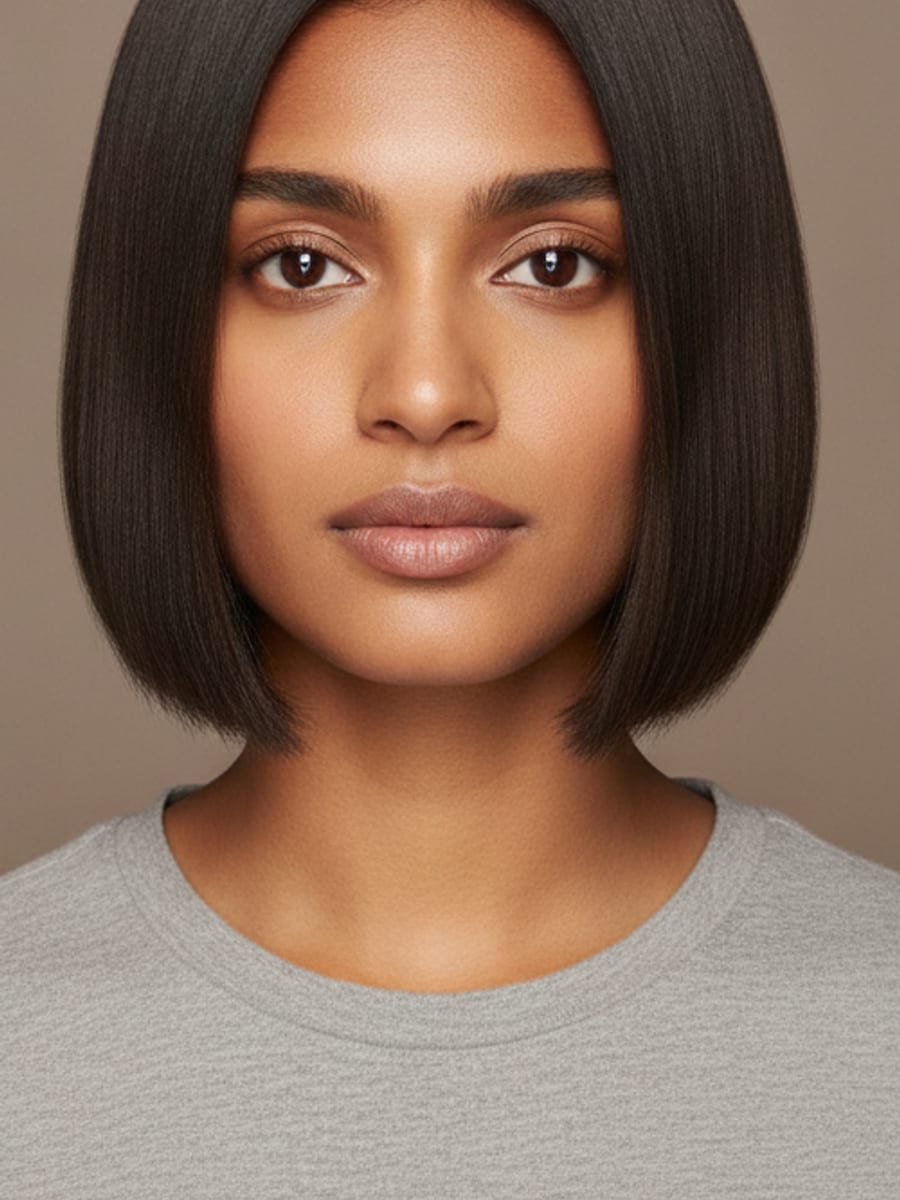 BeforeAfter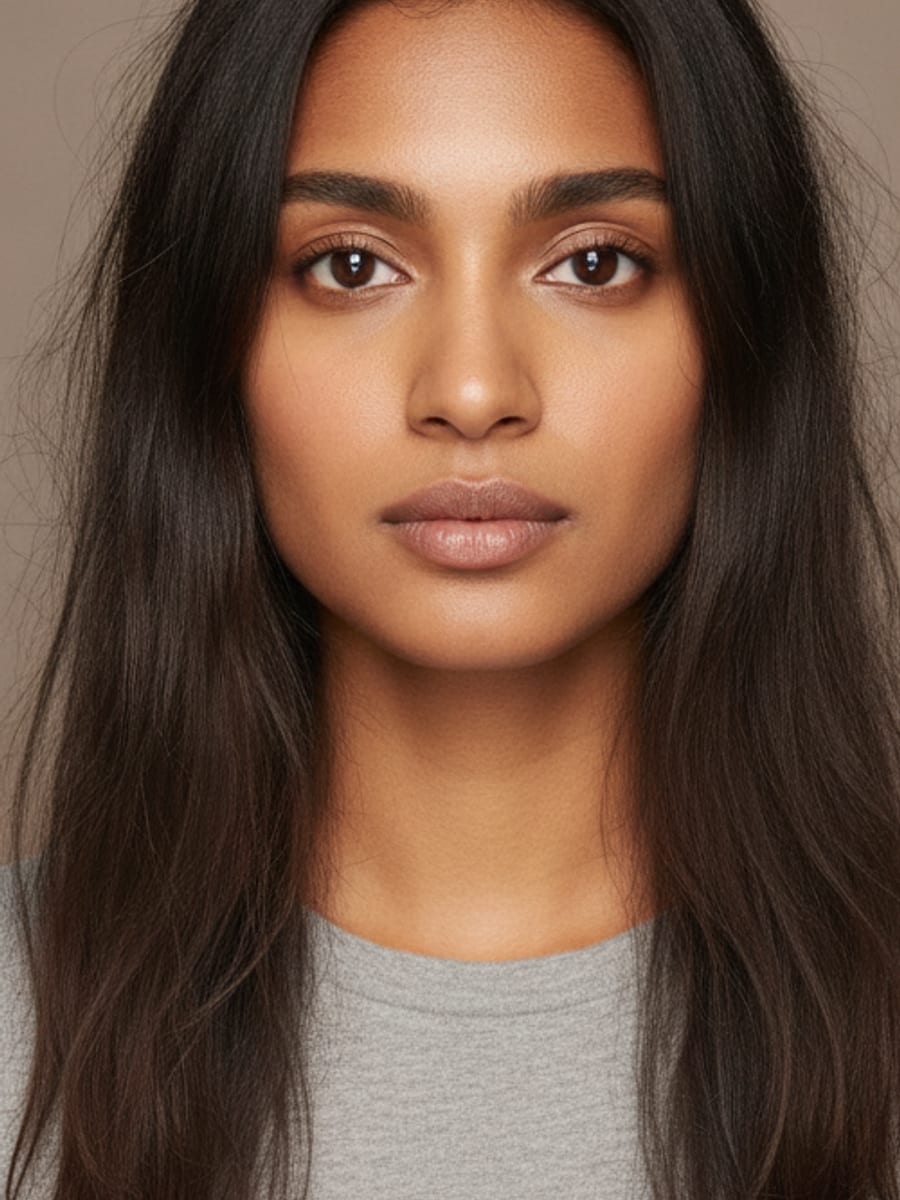
AI simulation, not a client photograph. Generated to illustrate the change in shape — the person shown is not a real client and this is not a result we photographed. For what a bob does on your hair specifically, use the free try-on at the top of this page, which runs on your own photo, or ask to see real in-salon examples at your consultation.
Amazing experience! The staff were friendly, professional, and really listened to what I wanted. The salon was clean, relaxing, and well-organized. I left with gorgeous, healthy-looking hair and felt completely refreshed. Great value for the service — highly recommend!
A genuine 5-star review of a haircut at our salon — not of this particular cut. For what the bob looks like on you specifically, the try-on above is the honest answer, and the in-salon consultation is free.
Bob haircut, answered.
Which type of bob suits my face shape?+
Round faces suit a long bob that finishes below the jaw, creating a vertical line. Square jaws suit a soft or textured bob that skims rather than stops at the jaw. Oval and heart shapes carry almost any length. Long faces are the one shape that benefits from pairing the bob with a fringe. Try a few above and see.
What is the difference between a bob and a lob?+
A lob is a long bob — it finishes at or below the collarbone rather than at the jaw. It is the lower-commitment version: the same blunt structure, but it can still be tied back, which is the practical reason most first-time bob clients choose it.
Does a bob suit thick Indian hair?+
Yes, with internal thinning. Left un-thinned, thick hair at chin length builds width at the jaw and reads triangular. A textured bob or a slightly longer finish solves it, and it is the first thing your stylist should raise at the consultation.
Can I tie my hair up with a bob?+
Not properly at chin length — expect to use clips for a few months if you go short. A long bob at the collarbone still ties into a small ponytail, which is why it is the more practical choice if you exercise or commute by two-wheeler.
How often does a bob need cutting?+
Every six to eight weeks to hold the line. More frequent than a long layered cut, less than a pixie, and each visit is short.
Keep exploring.
Ready when you are.
Consultations are free — bring the try-on result and we'll tell you honestly whether it will work with your hair. Open 10 AM – 9 PM, daily, at Reva Circle.
Full price list at tjhbagalur.com/menu · all 9 cuts