
Wolf cut
A wolf cut crosses a 70s shag with a soft mullet — short, heavy layers around the crown falling into long wispy ends.
See it on your face.
Take a photo or upload one. The wolf cut is first in the grid — every other cut we do is there too.
Start the camera or upload a photo above — face forward, hair back off your face.
Take your photo first to unlock these
It is the most-searched women's cut in Bengaluru by a wide margin, and the one most likely to go wrong on Indian hair if it is cut from a Pinterest photo without a texture conversation first. Straight, heavy, fast-growing hair does not hold a wolf cut the way the reference photos do — the layers have to be cut differently. Here is what it actually takes, and what it looks like on you.
- Short stacked layers at the crown, long face-framing pieces, deliberately thin and wispy ends.
- Reads as volume — it is the cut people ask for when their hair falls flat.
- Needs texture at the ends to work; a blunt-cut wolf is just a bad mullet.
- Air-dries well, which is the practical reason it caught on.
Face shape, texture, density.
Fine or flat hair that falls limp
This is the cut's core promise. Removing weight from the crown lets the roots lift, so hair that hangs from the scalp gets shape without a single styling product. If your hair goes flat by lunchtime, this is the strongest option on the page.
Natural wave and curl
Wave does the wolf cut's work for it — the layers separate on their own and the ends fall wispy without any encouragement. On 2A–3A hair it is close to a wash-and-go.
Round and square faces
The long face-framing pieces fall past the jaw and draw the eye vertically, which lengthens a round face. On a square jaw, they soften the corners without hiding them.
Anyone bored of one length
It is the biggest visual change available without colour or chemistry. If you want to look different on Monday, this does it.
When we'll talk you out of it
Very thick, coarse, poker-straight Indian hair is the honest exception. The layers that look wispy on fine hair sit as a solid triangular shelf on dense straight hair, and correcting that takes far more thinning than most stylists will do in one sitting. If that is your hair, long layers or a step cut gives you the movement without the shelf — and we would rather tell you here than after.
What it asks of you after.
Shape it every 8–10 weeks
The layers are the cut. Once the crown length catches up with the mid-lengths the shape flattens into an ordinary long layered cut, which is around ten weeks on average Indian growth.
Texture spray, not serum
It is one of the few cuts that wants grip rather than slip. A heavy smoothing serum weighs the crown down and undoes the entire point of it.
Rough-dry the roots, leave the ends
Thirty seconds upside down with a dryer at the roots is the whole styling routine. The ends are meant to look undone.
It grows out kindly — the layers soften into a long shag around month three and a face-framed long layered cut by month five, both of which are perfectly good haircuts. That forgiving grow-out is the reason we recommend trying it before something blunt.
What changes, roughly.
Drag to compare. An illustration of the difference a wolf cut makes to the same head of hair.
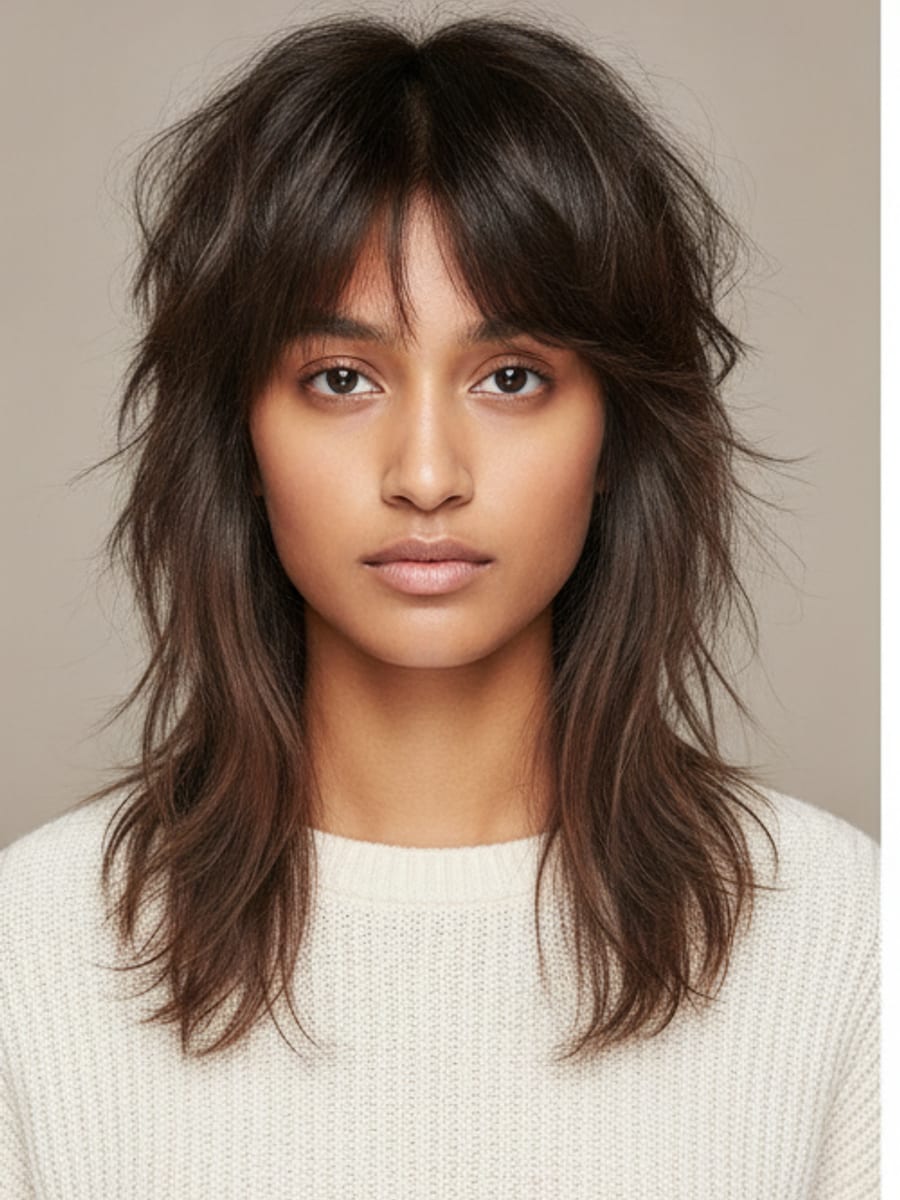 BeforeAfter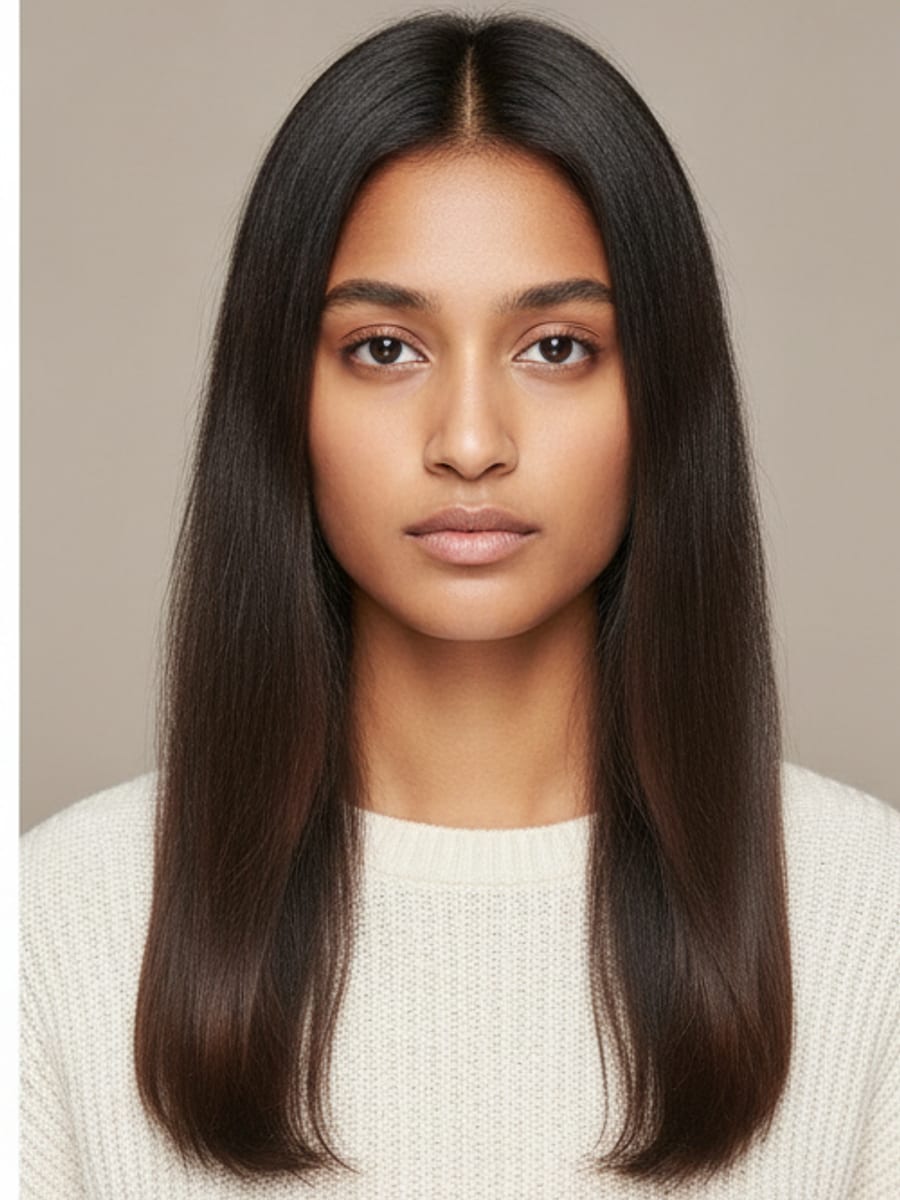
AI simulation, not a client photograph. Generated to illustrate the change in shape — the person shown is not a real client and this is not a result we photographed. For what a wolf cut does on your hair specifically, use the free try-on at the top of this page, which runs on your own photo, or ask to see real in-salon examples at your consultation.
Had a great haircut experience! Mr. Rizwaan did an excellent job — very professional, attentive to detail, and the final look was exactly what I wanted. Highly recommended.
A genuine 5-star review of a haircut at our salon — not of this particular cut. For what the wolf cut looks like on you specifically, the try-on above is the honest answer, and the in-salon consultation is free.
Wolf cut, answered.
Does a wolf cut suit straight Indian hair?+
It can, but it has to be cut differently — more internal thinning, softer weight lines and a longer face-framing section, or the layers stack into a triangle. Very thick straight hair is the one texture we sometimes steer away from it. Bring the reference photo and we will tell you honestly at the consultation whether your density will hold it.
What is the difference between a wolf cut and a shag?+
A shag is layered throughout with a fuller, more even outline. A wolf cut is more extreme at both ends: shorter and heavier at the crown, longer and wispier at the tips, with a clearer mullet influence at the back. A wolf cut is essentially a shag with the contrast turned up.
How long does hair need to be for a wolf cut?+
Roughly collarbone length or longer. There has to be enough distance between the crown layers and the ends for the contrast to read — on a shoulder-length bob the two lengths sit too close together and the result is just a heavy layered cut.
Will a wolf cut make my hair look thinner?+
At the ends, deliberately yes — the wispy tips are the style. Overall it usually reads as more hair, not less, because the crown lifts. If your hair is already fine at the ends and you want the tips to look denser, a blunt long layer is the better answer.
How much styling does a wolf cut need daily?+
Very little, which is most of its appeal. Rough-dry the roots for texture and leave the ends alone. Most clients spend under two minutes on it, and it looks better on day two than day one.
Keep exploring.
Ready when you are.
Consultations are free — bring the try-on result and we'll tell you honestly whether it will work with your hair. Open 10 AM – 9 PM, daily, at Reva Circle.
Full price list at tjhbagalur.com/menu · all 9 cuts