
Step cut
A step cut is long hair cut in distinct layer lengths that fall as visible steps, each one shorter than the length below it.
See it on your face.
Take a photo or upload one. The step cut is first in the grid — every other cut we do is there too.
It is the most requested layered cut in Indian salons and the most commonly mis-specified. 'Step cut' and 'layers' get used interchangeably, but a true step cut keeps the edge of each layer visible rather than blending it away. That definition matters, because it is the difference between the cut you asked for and the one you got.
- Distinct, visible layer lengths — the steps are the point, not a side effect.
- Keeps overall length while removing bulk through the mid-lengths.
- Reads as structure and shape rather than softness.
- Holds up on thick straight hair better than almost any other layered cut.
Face shape, texture, density.
Thick, straight, heavy hair
Dense Indian hair is where a step cut earns its reputation. Blunt long hair of that weight hangs like a curtain; stepping it creates visible shape and takes real bulk out of the mid-lengths without touching your length.
Long hair with no shape
If your hair has been one length for years and looks the same wet or dry, this is the cut that changes it most while keeping every inch you have grown.
Round and square faces
The first step can be set at the cheekbone or the jaw to create a vertical line down the face, which slims a round shape and takes the hard edge off a square jaw.
Anyone who ties their hair up daily
The steps read even in a ponytail, so the shape does not disappear the moment you tie it back — unlike most soft-blended layered cuts.
When we'll talk you out of it
Fine hair, where the visible edges expose how little hair sits in each section and the ends look thin. Also wrong for curly hair, where the curl hides the steps entirely and you pay for structure you cannot see — curly hair wants shaped layers cut dry instead.
What it asks of you after.
Re-cut every 10–12 weeks
The steps blur as they grow, and around three months it reads as an ordinary layered cut. That is not a bad outcome, but if you want the structure it needs re-cutting.
It rewards a blow-dry, does not need one
The steps show when air-dried and show more with a round brush. Unlike a butterfly cut, it does not depend on heat to look intentional.
Deep condition the mid-lengths
The steps sit exactly where hard-water damage concentrates. A weekly mask through the mid-lengths keeps the edges looking cut rather than frayed.
Softens gradually into long layers over three to four months with no awkward phase. It is one of the safest long-hair cuts to try, which is a large part of why it has stayed the default ask for decades.
What changes, roughly.
Drag to compare. An illustration of the difference a step cut makes to the same head of hair.
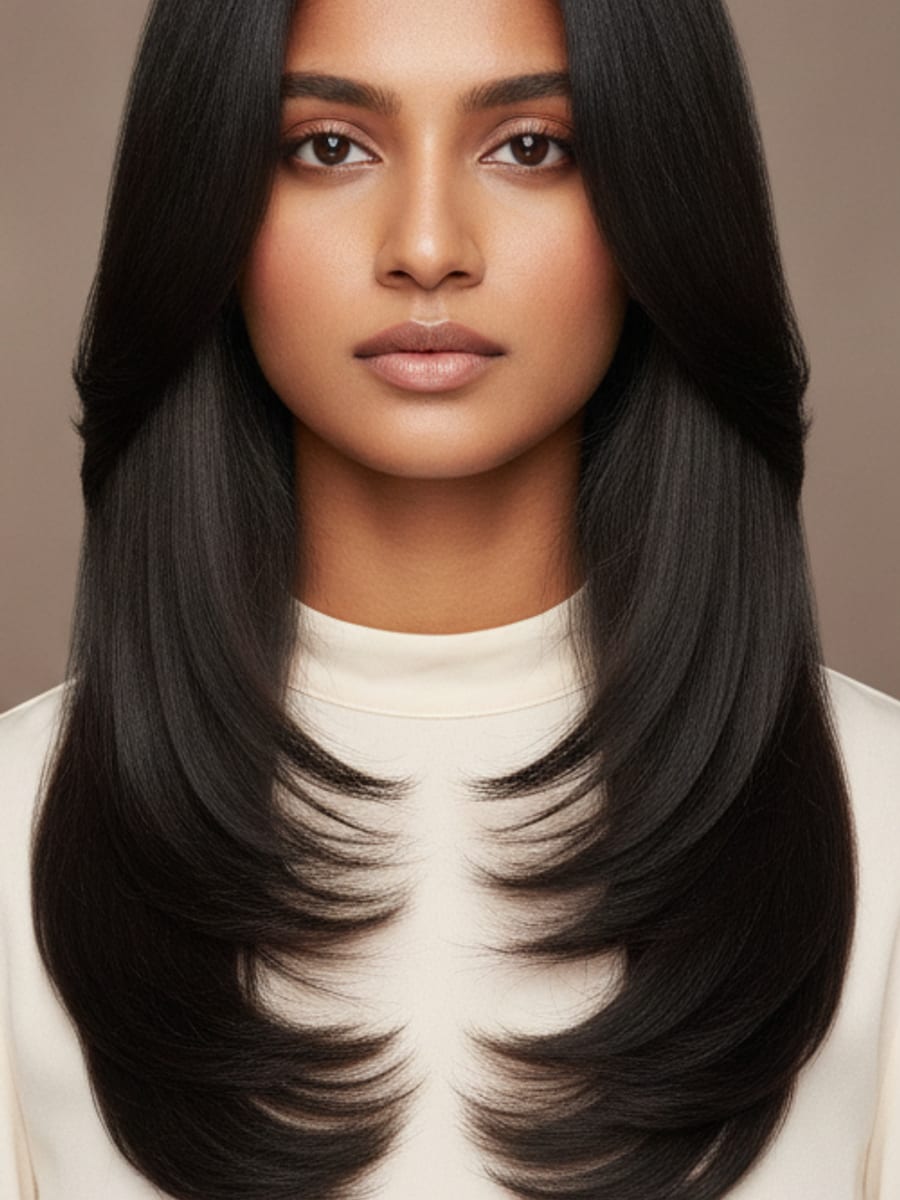 BeforeAfter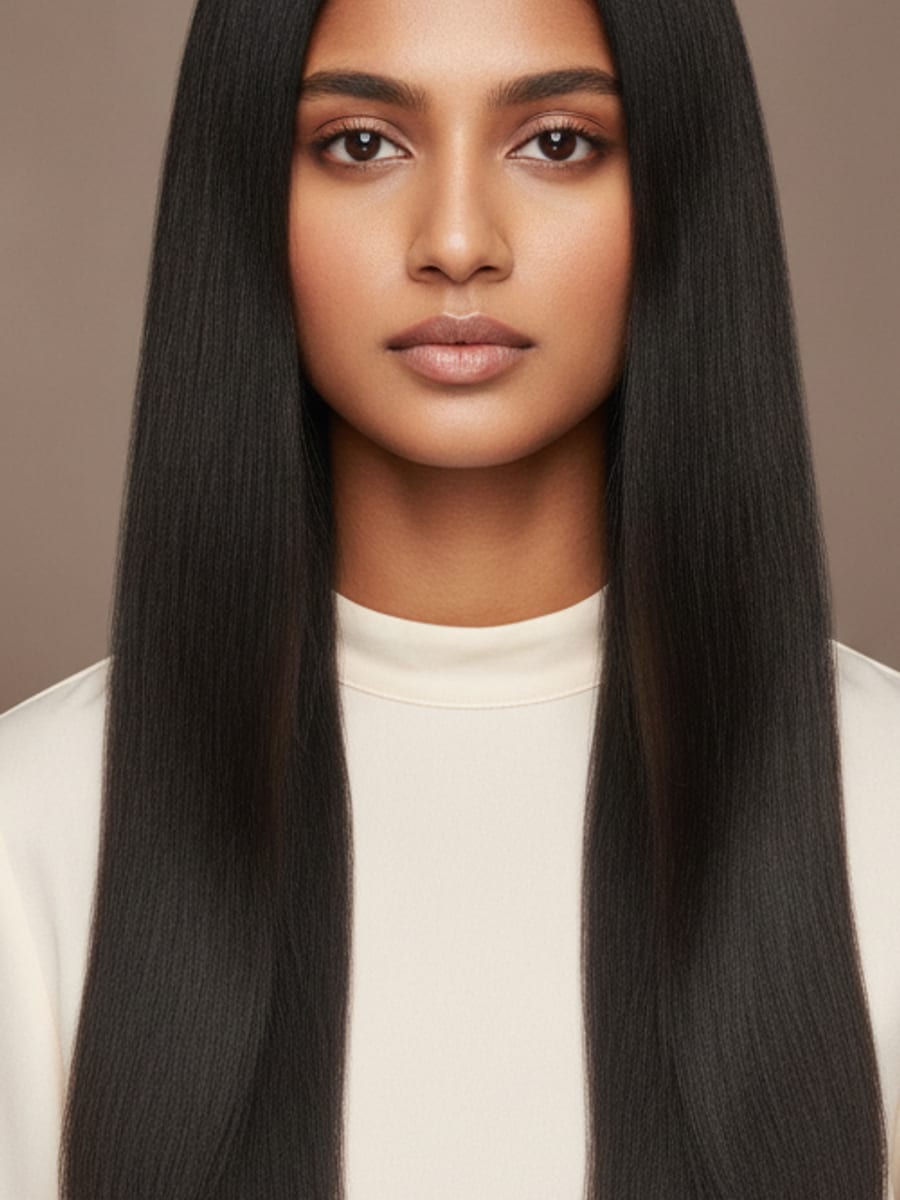
AI simulation, not a client photograph. Generated to illustrate the change in shape — the person shown is not a real client and this is not a result we photographed. For what a step cut does on your hair specifically, use the free try-on at the top of this page, which runs on your own photo, or ask to see real in-salon examples at your consultation.
Wonderful salon. Great service, loved the haircut I got. Would definitely go again since it's so close to my college and affordable.
A genuine 5-star review of a haircut at our salon — not of this particular cut. For what the step cut looks like on you specifically, the try-on above is the honest answer, and the in-salon consultation is free.
Step cut, answered.
What is the difference between a step cut and layers?+
All step cuts are layered, but not all layered cuts are step cuts. A step cut deliberately leaves the edge of each layer visible so the lengths read as distinct steps. General layering blends those edges together for a softer, seamless result. Say which you want — the words are used loosely, and it changes the outcome.
Step cut or feather cut for thick hair?+
Both work; they solve different problems. A step cut gives thick hair visible shape and structure. A feather cut takes weight out of the ends so it moves more. If your complaint is 'my hair has no shape', ask for steps. If it is 'my hair is too heavy', ask for feathering. Many clients end up with both.
Does a step cut reduce hair length?+
The lowest layer keeps your length — only the layers above it are shorter. Say at the start that you want to maintain length and the stylist will set the longest step at your current perimeter and work upward from there.
How many steps should I ask for?+
Two to three is standard on shoulder-to-mid-back hair. More than that on average density starts thinning the ends. The right number depends on how much hair you have, and it is the main thing worth discussing in the chair.
Does a step cut suit short hair?+
It needs length to read — below the shoulders at minimum. On shorter hair the steps sit too close together to be visible, and a graduated bob achieves a similar structured effect at that length.
Keep exploring.
Ready when you are.
Consultations are free — bring the try-on result and we'll tell you honestly whether it will work with your hair. Open 10 AM – 9 PM, daily, at Reva Circle.
Full price list at tjhbagalur.com/menu · all 9 cuts