
Feather cut
A feather cut tapers the ends of long layers so they fall in soft, light strands instead of a single blunt line.
See it on your face.
Take a photo or upload one. The feather cut is first in the grid — every other cut we do is there too.
It is the layered cut Indian salons have been doing for thirty years, and it stays popular because it solves a specific problem: heavy hair that hangs without moving. The layers are cut at a steep angle so each one thins toward the tip — 'feathered' describes the ends, not the shape. Done well it looks effortless. Done on the wrong density it looks stringy, which is the honest risk worth knowing first.
- Soft tapered ends through long layers — movement without losing overall length.
- The lightest-feeling cut on this page; it removes real weight from thick hair.
- Air-dries with shape, which is why it suits a Bangalore commute.
- Best on medium-to-thick hair; fine hair loses density it cannot spare.
Face shape, texture, density.
Thick, heavy hair that never moves
This is what a feather cut is for. Tapering the ends takes genuine weight out, so hair that sat as one solid mass starts to swing and lift. Clients almost always describe it as their hair feeling lighter.
Straight hair that falls flat
Straight Indian hair holds a blunt line beautifully and moves not at all. Feathering breaks that line, which is the cheapest way to buy movement without a wave or a perm.
Oval, round and square faces
Face-framing feathers can be set to start anywhere — at the cheekbone to slim, at the jaw to soften, at the collarbone to stay subtle. It is the most adjustable cut here for face shape.
Anyone who does not want to style
It is the strongest option on this page for a genuine wash-and-leave routine on long hair.
When we'll talk you out of it
Fine or thinning hair. Tapering the ends removes exactly the density fine hair needs at the tips, and the result reads wispy rather than soft. A blunt cut with long face-framing layers gives movement at the front while keeping the ends looking full.
What it asks of you after.
Refresh every 10–12 weeks
The feathered tips are the first thing to go — they blunt as they grow and the movement fades before the length does. A dusting of the ends restores it without losing length.
Serum on the ends only
Tapered ends are thinner and dry out faster, especially in Bangalore's hard water. A light serum on the last three inches after every wash is the single highest-value habit for this cut.
Expect split ends sooner
Any tapered end splits earlier than a blunt one. That is not a flaw in the cut, it is physics, and a regular dusting handles it.
Very gradual. Feathered ends simply blunt over three to four months and you are left with ordinary long layers. There is no shape to grow past and no awkward stage, which is why it has stayed such a common default cut.
What changes, roughly.
Drag to compare. An illustration of the difference a feather cut makes to the same head of hair.
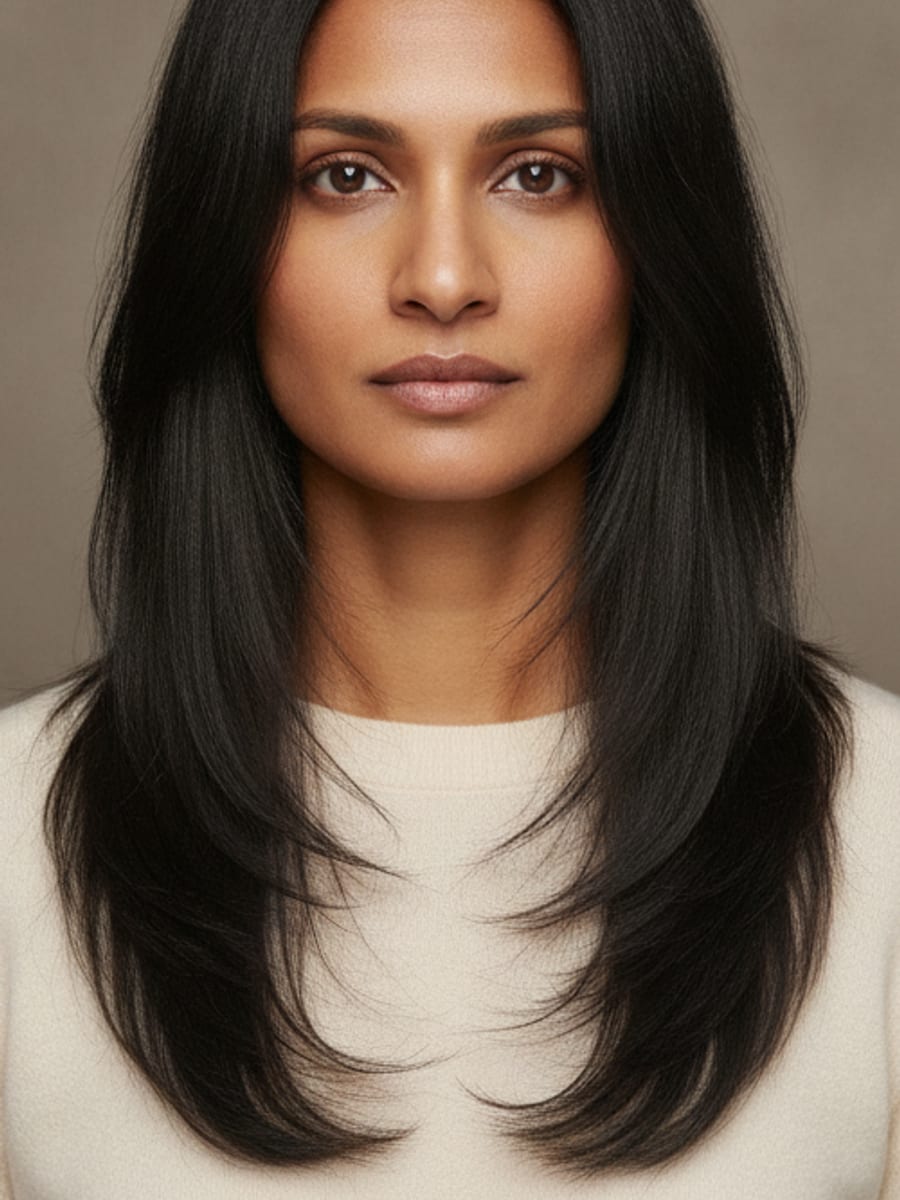 BeforeAfter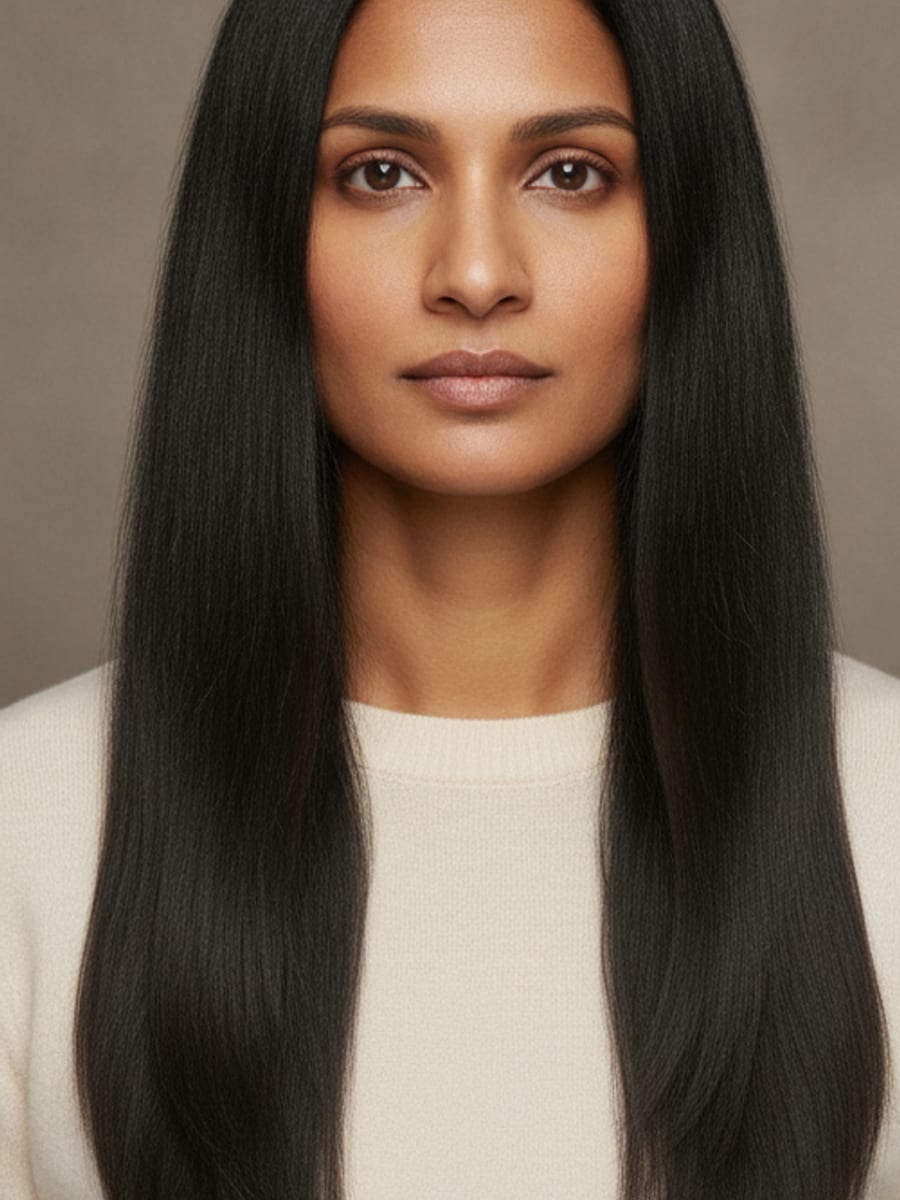
AI simulation, not a client photograph. Generated to illustrate the change in shape — the person shown is not a real client and this is not a result we photographed. For what a feather cut does on your hair specifically, use the free try-on at the top of this page, which runs on your own photo, or ask to see real in-salon examples at your consultation.
Awesome service for hair and beard by Khan. Really affordable prices.
A genuine 5-star review of a haircut at our salon — not of this particular cut. For what the feather cut looks like on you specifically, the try-on above is the honest answer, and the in-salon consultation is free.
Feather cut, answered.
What is a feather cut?+
A long layered cut where the ends of each layer are tapered thin rather than left blunt, so they fall in light separated strands. The layering itself can be subtle or dramatic; the feathering refers specifically to how the ends are finished.
Feather cut or step cut — which should I get?+
A step cut has visible, distinct layer lengths that read as steps, with more defined edges. A feather cut blends those edges away into soft tapered ends. Step is the more structured look; feather is the softer, more blended one. On very thick hair, step gives more visible shape.
Does a feather cut suit thin hair?+
Generally no. Thinning the ends is the opposite of what fine hair needs, and it can leave the tips looking sparse. Ask for a blunt perimeter with face-framing layers instead — the front reads the same way and the ends keep their weight.
Will a feather cut reduce my hair volume?+
It reduces bulk, not root volume. Thick hair usually looks better proportioned afterwards because the weight comes out of the ends rather than the top. If your concern is flat roots, layering at the crown is the change to ask for, not feathering at the tips.
How much length do I lose in a feather cut?+
Very little if you ask for the length to be kept — the layering happens above the perimeter and the tapering is on the ends themselves. Say clearly at the start that you want to maintain length; it changes how the stylist sets the guide.
Keep exploring.
Ready when you are.
Consultations are free — bring the try-on result and we'll tell you honestly whether it will work with your hair. Open 10 AM – 9 PM, daily, at Reva Circle.
Full price list at tjhbagalur.com/menu · all 9 cuts