
Low fade haircut
A low fade starts the taper just above the ear and follows the hairline down to the neck — the most conservative of the three fade heights.
See it on your face.
Take a photo or upload one. The low fade is first in the grid — every other cut we do is there too.
Fade is the single most-searched men's haircut term in Bengaluru, and most of the confusion is about where the fade starts rather than what it is. Low, mid and high describe one thing only: how far up the head the shortest point sits. Low keeps the change near the ear, which is why it is the fade that works under a helmet, in an office, and at a wedding without needing a different story for each.
- The taper begins just above the ear and hugs the hairline — nothing removed from the upper sides.
- Reads as a tidy regular haircut from the front; the detail shows in profile.
- Works with any length on top, from a crop to a pompadour to a bro flow.
- Sharpest for about two weeks, which is the honest trade for how clean it looks on day one.
Face shape, texture, density.
Round and diamond faces
Because a low fade keeps weight on the upper sides, it does not narrow the head the way a high fade does. That preserved width stops a round face reading rounder, and it softens a diamond face's cheekbone line.
Offices with a dress code
It is the fade that does not announce itself. From the front you have a neat short back and sides; the gradient only reads when someone is standing beside you. That is why it is the default ask from Manyata and Bhartiya City.
Anyone growing the top out
A low fade keeps the sides controlled while length comes in on top, so the in-between months look intentional. It is the standard route from a short crop to a quiff or a middle part.
Thick Indian hair that puffs at the sides
The wing of volume above the ear is the most common complaint we hear, and a low fade removes exactly that weight without touching the shape on top.
When we'll talk you out of it
Long face shapes — a low fade adds height and length where you do not need it, and a mid fade or a taper with more side weight balances better. It is also the wrong ask if you want six weeks between haircuts; the whole point of a fade is a crisp gradient, and crisp is a two-week state.
What it asks of you after.
Re-fade every 2–3 weeks
The gradient blurs first at the shortest point. At three weeks it still looks like a haircut; at five it looks like a grown-out one. Booking the same slot every third Saturday is how most of our regulars handle it.
The top drives the styling, not the fade
The sides need nothing. Whatever product routine you had for the length on top is unchanged — a matte clay for a crop, a light cream for a flow.
Tell us the number, not just 'low'
Bring a photo, or use the try-on above. 'Low fade' covers both a #0 skin fade and a #2 taper, and those are very different haircuts.
A low fade grows out more gracefully than a high one, because there is less distance between the shortest and longest points to blur. By week five it has become a soft taper, which is a real haircut in its own right — many clients simply let it settle there through a busy month and re-sharpen after.
What changes, roughly.
Drag to compare. An illustration of the difference a low fade makes to the same head of hair.
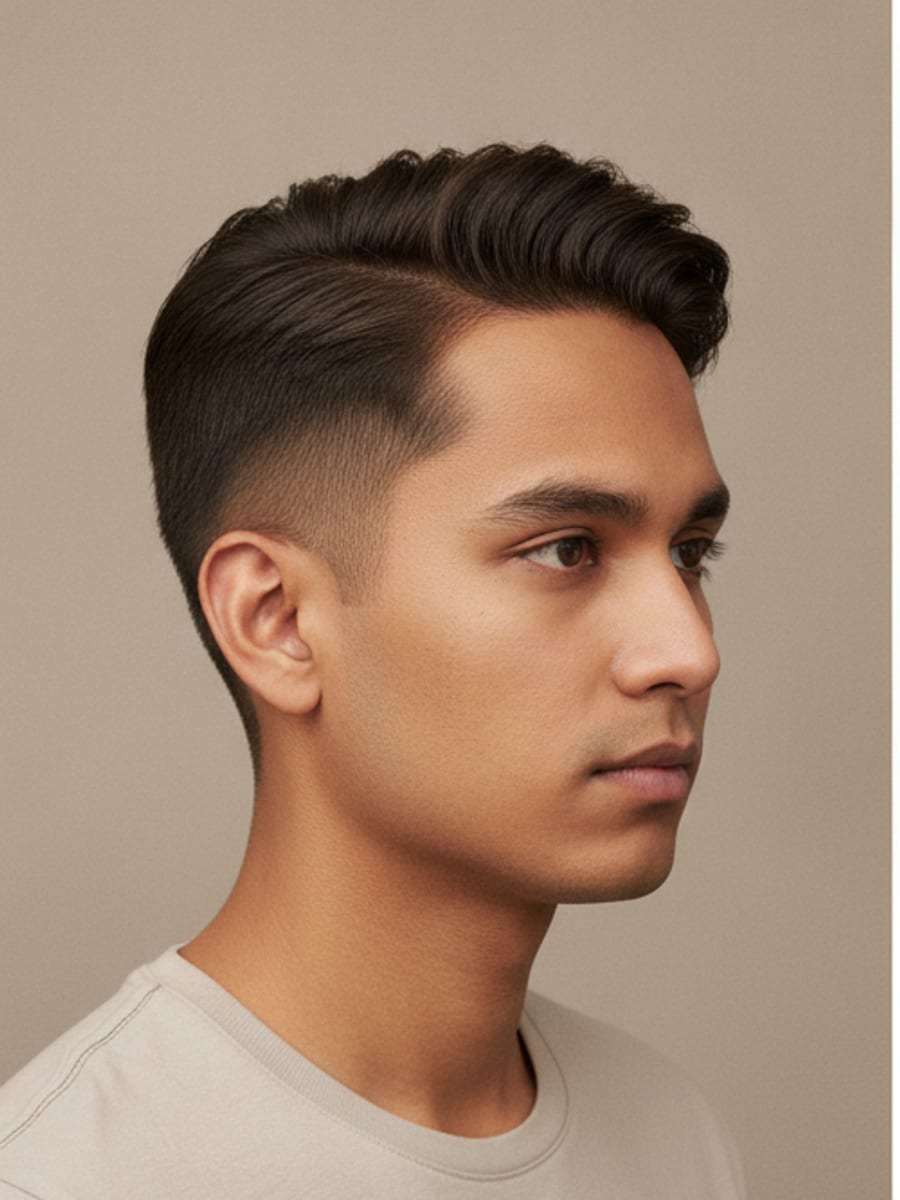 BeforeAfter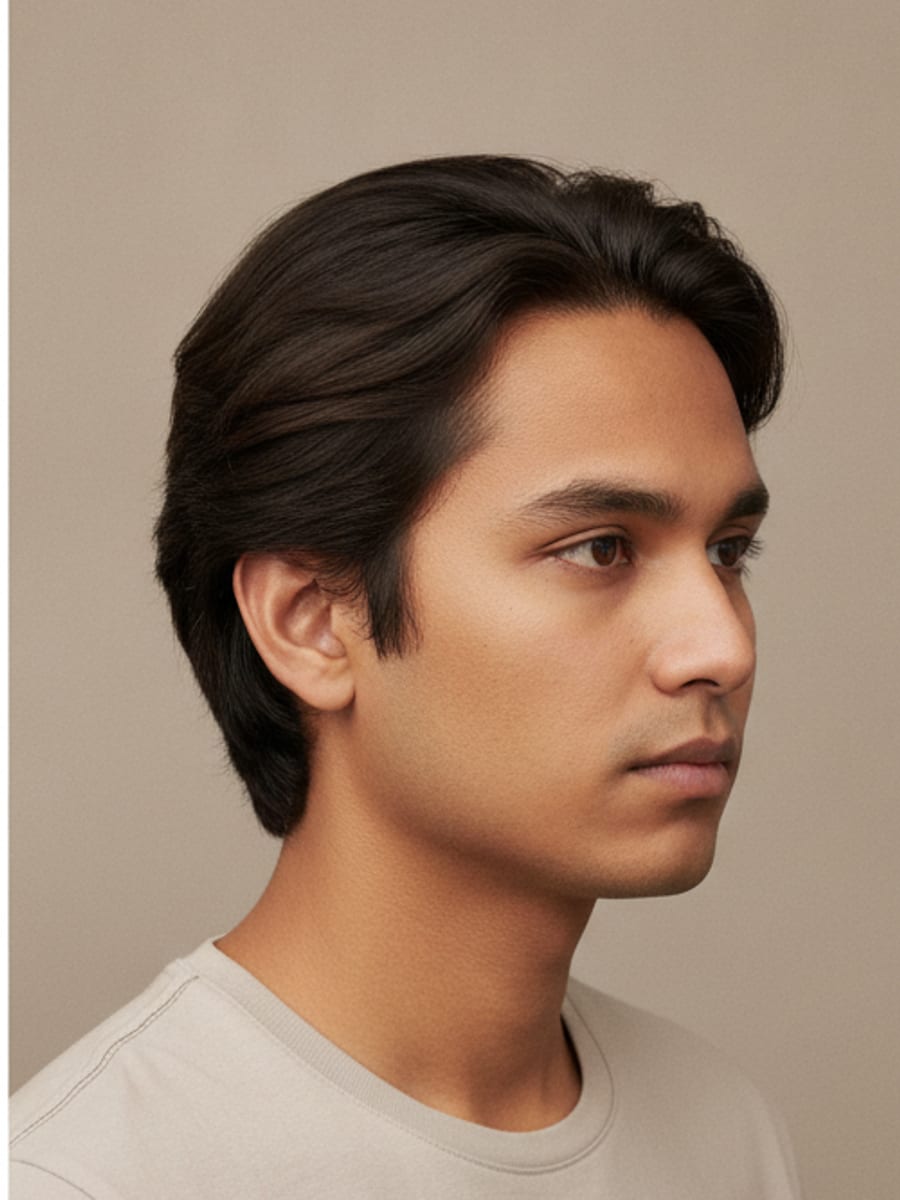
AI simulation, not a client photograph. Generated to illustrate the change in shape — the person shown is not a real client and this is not a result we photographed. For what a low fade does on your hair specifically, use the free try-on at the top of this page, which runs on your own photo, or ask to see real in-salon examples at your consultation.
I flew from the US and landed at this place to get a haircut, beard trim and a facial done. The service was top notch. The staff and owner were very nice and helpful. Highly recommend this place to everyone.
A genuine 5-star review of a haircut at our salon — not of this particular cut. For what the low fade looks like on you specifically, the try-on above is the honest answer, and the in-salon consultation is free.
Low fade haircut, answered.
What is the difference between a low fade and a taper?+
A taper is a gentle shortening at the sideburn and nape only, and it never goes down to skin. A low fade takes the same area but blends it through several guard lengths to a much shorter finish. A taper is the more conservative of the two, and it is the one to ask for if you want six weeks between cuts.
Low fade or mid fade — which suits me?+
Low keeps width on the upper sides, so it flatters round, square and diamond faces. Mid starts the taper at the temple and slims the head, which suits round faces wanting a sharper outline and anyone with a wide crown. If you are unsure, start low: going higher next visit takes five minutes, coming back down takes a month.
How often does a low fade need to be redone?+
Every two to three weeks to stay sharp. If you can only come monthly, ask for a low taper instead — it holds its shape considerably longer and grows out without an obvious line.
Does a low fade work with curly hair?+
Very well, and it is one of the best pairings on the menu. Removing bulk at the sides gives curls on top somewhere to sit, so the shape reads as deliberate volume instead of width. Expect a slightly softer gradient — curl hides a hard line, which is a feature here.
Can I get a low fade with a beard?+
Yes, and the connection point is what makes or breaks it. A low fade can either blend into the beard line or stop with a clean disconnect above it. Tell your stylist which you want before they start; changing your mind halfway is not possible in the same sitting.
Keep exploring.
Ready when you are.
Consultations are free — bring the try-on result and we'll tell you honestly whether it will work with your hair. Open 10 AM – 9 PM, daily, at Reva Circle.
Full price list at tjhbagalur.com/menu · all 9 cuts